NOLA WESTBANK HOMES

NOLA WESTBANK HOMES
New Orleans Westbank Real Estate

Friday, July 30, 2010

National Housing Trends


June housing sales were up for the 10th month in a row as closed units were up 11.4 % over June 2009 while prices climed 8.8% for the same period.  All regions of the country were up in both units closed and average prices.  The main reasons are believed to be the continued impact of the tax credit and low interest rates.
In both our region here in the South and the Midwest, June 2010 housing units rose 8.5% over June 2009.  The highest increase is in the Northeast which rose 28.3% over June 2009, the strongesat results for any region for the sixth consecutive month.

The increase in housing sales for the 10th month in a row where housing sales for the present month were above the same month from the prior year; and price increases just hit their 7th month in a row on the same basis.  Housing sales for the entire year are expected to be above the level of 2009 in the range of 4-7% even with a decline in this year's second half.  Home prices will continue to strengthen for at least the next three months but may level out thereafter.  The upper price end  of most housing markets remains soft at this time with no significant recovery in sight at this time.

Below are charts with more information graphs showing Home Sale trends including Housing Inventory, Mortgage Rates and Affordability nationwide:


In my post to come I will give you an update of the local housing sale statistics.

To view our inventory of Visual Tours Click:
Call Us Today:

Thursday, July 22, 2010

Smart Kitchen Remodeling

Most people realize that the Kitchen and Bathrooms are generally the 2 areas of the home that make a big difference when it comes to selling your home and can cost you the most money...
And if you bought your home at a discount so that you can fix these areas up for yourself to your liking, the articles I gathered below will be sure to help.

Since I was not here last week to blog (I was on vacation), I thought that I would gather a few articles this week to make up for the time lost...

To view our inventory of Visual Tours Click:
Call Us Today:

Friday, July 9, 2010

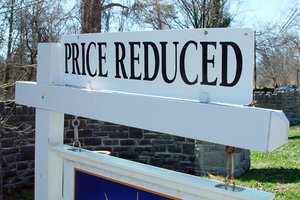
6 Reasons to Reduce Your Home Price

While you’d like to get the best price for your home, consider our six reasons to reduce your home price.

If you don't receive any offers for a few weeks, check out other comparable houses on the market and what they're going for.

Home not selling? That could happen for a number of reasons you can’t control, like a unique home layout or having one of the few homes in the neighborhood without a garage. There is one factor you can control: your home price.


These six signs may be telling you it’s time to lower your price.

1. You’re drawing few lookers

You get the most interest in your home right after you put it on the market because buyers want to catch a great new home before anybody else takes it. If your real estate agent reports there have been fewer buyers calling about and asking to tour your home than there have been for other homes in your area, that may be a sign buyers think it’s overpriced and are waiting for the price to fall before viewing it.

2. You’re drawing lots of lookers but have no offers

If you’ve had 30 sets of potential buyers come through your home and not a single one has made an offer, something is off. What are other agents telling your agent about your home? An overly high price may be discouraging buyers from making an offer.

3. Your home’s been on the market longer than similar homes

Ask your real estate agent about the average number of days it takes to sell a home in your market. If the answer is 30 and you’re pushing 45, your price may be affecting buyer interest. When a home sits on the market, buyers can begin to wonder if there’s something wrong with it, which can delay a sale even further. At least consider lowering your asking price.

4. You have a deadline

If you’ve got to sell soon because of a job transfer or you’ve already purchased another home, it may be necessary to generate buyer interest by dropping your price so your home is a little lower priced than comparable homes in your area. Remember: It’s not how much money you need that determines the sale price of your home, it’s how much money a buyer is willing to spend.

5. You can’t make upgrades

Maybe you’re plum out of cash and don’t have the funds to put fresh paint on the walls, clean the carpets, and add curb appeal. But the feedback your agent is reporting from buyers is that your home isn’t as well-appointed as similarly priced homes. When your home has been on the market longer than comparable homes in better condition, it’s time to accept that buyers expect to pay less for a home that doesn’t show as well as others.

6. The competition has changed

If weeks go by with no offers, continue to check out the competition. What have comparable homes sold for and what’s still on the market? What new listings have been added since you listed your home for sale? If comparable home sales or new listings show your price is too steep, consider a price reduction.

More Helpful Advice:

How to ready your home for sale at little cost

How to review offers on your home

G.M. Filisko is an attorney and award-winning writer who made strategic price reductions that led to the sale of a Wisconsin property. A frequent contributor to many national publications including Bankrate.com, REALTOR® Magazine, and the American Bar Association Journal, she specializes in real estate, business, personal finance, and legal topics.

To view our inventory of Visual Tours Click:
Call Us Today:

Thursday, July 1, 2010

Keep Your Home Sale from Falling Apart


If something falls apart before a home sells, the sellers are responsible for fixing it.


Finding a buyer for your home is just the first step on the homeselling path. Tread carefully in the weeks ahead because if you make one of these common seller mistakes, your deal may not close.


Mistake #1: Ignore contingencies


If your contract requires you to do something before the sale, do it. If the buyers make the sale contingent on certain repairs, don’t do cheap patch-jobs and expect the buyers not to notice the fixes weren’t done properly.

Mistake #2: Don’t bother to fix things that break


The last thing any seller needs is for the buyers to notice on the pre-closing walk-through that the home isn’t in the same condition as when they made their offer. When things fall apart in a home about to be purchased, sellers must make the repairs. If the furnace fails, get a professional to fix it, and inform the buyers that the work was done. When you fail to maintain the home, the buyers may lose confidence in your integrity and the condition of the home and back out of the sale.

Mistake #3: Get lax about deadlines


Treat deadlines as sacrosanct. If you have three days to accept or reject the home inspection, make your decision within three days. If you’re selling, move out a few days early, so you can turn over the keys at closing.

Mistake #4: Refuse to negotiate any further


Once you’ve negotiated a price, it’s natural to calculate how much you’ll walk away with from the closing table. However, problems uncovered during inspections will have to be fixed. The appraisal may come in at a price below what the buyers offered to pay. Be prepared to negotiate with the buyers over these bottom-line-influencing issues.

Mistake #5: Hide liens from buyers


Did you neglect to mention that Uncle Sam has placed a tax lien on your home or you owe six months of homeowners association fees? The title search is going to turn up any liens filed on your house. To sell your house, you have to pay off the lien (or get the borrower to agree to pay it off). If you can do that with the sales proceeds, great. If not, the sale isn’t going to close.
After finding a buyer, all you have to do to make it to closing is to avoid these five traps.


Information obtained By:
To view our inventory of Visual Tours Click:
Call Us Today:

Saturday, June 26, 2010

Create a Home Emergency Preparedness Kit

Having a home emergency preparedness kit could be the key to your family’s safety if disaster strikes.


Garage doors are particularly susceptible to storm damage. Learn how to reinforce garage doors before a storm hits. Additional home improvement videos can be found at DannyLipford.com.

Preparing a home emergency preparedness kit you hope never to use may seem like a waste of time and money. But when disasters happen that are beyond your control, you can take charge of how you respond. “What became clear in Hurricane Katrina is that in big events, the government isn’t going to come to your aid right away. You have to be prepared to take care of yourself,” says Rick Bissell, PhD, a professor of emergency health services at the University of Maryland, Baltimore. According to a 2008 FEMA survey, more than half of all U.S. households have some sort of disaster preparation in place. If yours isn’t one of them, here’s what you need to do.


First, make sure important papers are in order


If a flood destroys your home, you could spend weeks or even months just trying to re-create the essential documents you’ll need to get back on track. That’s why it’s critical to have backups of important papers, including the deed to your house, proof of insurance, medical records, passports, social security cards, and a list of personal contacts. Keep one copy at home in a portable case and another offsite in a safe place. And while you’re at it, use the opportunity to check whether your insurance is up to date. “People often don’t know what their homeowners’ insurance policy covers, and most don’t cover flooding,” points out Bissell. Find out what hazards your area faces, and make sure you’re protected against them.


Tailor a preparedness kit to your personal needs


Humanitarian organizations and government aid agencies offer guidelines for creating an emergency preparedness kit. But along with the basics like food and water, it’s important to have what you need for your particular situation. You may not need extra blankets in southern California, but you do need escape ladders in case of wildfire. And you’ll want extra extra blankets to survive a winter power outage in Maine.
Think about what you need for the safety of your house, too. Knowing where to find the main electrical and water shutoffs—and having the right wrench to turn them—can make the difference between a house that weathers the storm and one that experiences catastrophic flooding or fire.


A basic emergency preparedness kit


FEMA recommends you keep a “grab and go” bag with these items in case you need to evacuate:
Water: One gallon per person per day for at least three days, for drinking and sanitation; double if you live in a very hot climate, have young kids, or are nursing. Bottled water is best, but you can also store tap water in food-grade containers or two-liter soda bottles that have been sanitized. Factor in your pet’s water needs, too.
Food: At least a three-day supply of nonperishables and a can opener. Pack protein, fruit, and vegetables, but make sure they’re in a form you actually like—it’s bad enough not to have access to fresh food without also having to subsist on nothing but canned tuna. Include treats like cereal bars, trail mix, and Tootsie Rolls. Store food in pest-proof plastic or metal tubs and keep it in a cool, dry place.
Flashlights and extra batteries: “Candles are not recommended because there are many house fires caused by candles left unattended,” says David Riedman, a public affairs officer with FEMA.
First-aid supplies: Two pairs of sterile gloves, adhesive bandages and sterile dressings, soap or other cleanser, antibiotic towelettes and ointment, burn ointment, eye wash, thermometer, scissors, tweezers, petroleum jelly, aspirin or non-aspirin pain reliever, and stomach analgesics such as Tums, Pepto-Bismol, and a laxative. (All those Tootsie Rolls can be hard to digest.)
Sanitation and hygiene supplies: Moist towelettes, paper towels, toilet paper, garbage bags, and plastic ties. You might also want travel-size shampoo, toothpaste/toothbrush, and deodorant.
Radio or TV: Keep a portable, battery- or crank-operated radio or television and extra batteries to remain connected in case the power goes out, as well as an extra cell phone charger. You can buy a good emergency radio online from the Red Cross.
Plastic sheeting, duct tape, and dust masks: In case you need to seal your home or shelter from airborne contaminants.
Extra items: A whistle to signal for help, a favorite toy or other comfort items for kids.
Cash.
Update your kit as your needs change, and replace food and water approaching its expiration date. You might pick a specific time each year to check, such as before hurricane season in the south or after Thanksgiving if you live in the north.
Wendy Paris is a New York-based writer whose work has appeared in This Old House magazine and other publications. She keeps chocolate chips on hand in case of emergency.

Video provided by Today’s Homeowner host, Danny Lipford.

To view our inventory of Visual Tours Click:
Call Us Today:

Tuesday, June 22, 2010

4 Tips to Determine How Much Mortgage You Can Afford


By knowing how much mortgage you can handle, you can ensure that home ownership will fit in your budget.

Here are six surefire ways you can get your finances in order before you buy a home.


Homeownership should make you feel safe and secure, and that includes financially. Be sure you can afford your home by calculating how much of a mortgage you can safely fit into your budget.

Instead of just taking out the biggest mortgage a lender qualifies you to borrow, consider how much you want to pay each month for housing based on your financial and personal goals.


Think ahead to major life events and consider how those might influence your budget. Do you want to return to school for an advanced degree? Will a new child add day care to your monthly expenses? Does a relative plan to eventually live with you and contribute to the mortgage?

Still not sure how much you can afford? You can use the same formulas that most lenders use, or try another of these traditional methods for estimating the amount of mortgage you can afford.

1. The general rule of mortgage affordability

As a rule of thumb, you can typically afford a home priced two to three times your gross income. If you earn $100,000, you can typically afford a home between $200,000 and $300,000.

To understand how that rule applies to your particular financial situation, prepare a family budget and list all the costs of homeownership, like property taxes, insurance, maintenance, utilities, and community association fees, if applicable, as well as costs specific to your family, such as day care costs.

2. Factor in your downpayment

How much money do you have for a downpayment? The higher your downpayment, the lower your monthly payments will be. If you put down at least 20% of the home’s cost, you may not have to get private mortgage insurance, which costs hundreds. That leaves more money for your mortgage payment.
The lower your downpayment, the higher the loan amount you’ll need to qualify for and the higher your monthly mortgage payment.

3. Consider your overall debt

Lenders generally follow the 28/41 rule. Your monthly mortgage payments covering your home loan principal, interest, taxes, and insurance shouldn’t total more than 28% of your gross annual income. Your overall monthly payments for your mortgage plus all your other bills, like car loans, utilities, and credit cards, shouldn’t exceed 41% of your gross annual income.

Here’s how that works. If your gross annual income is $100,000, multiply by 28% and then divide by 12 months to arrive at a monthly mortgage payment of $2,333 or less. Next, check the total of all your monthly bills including your potential mortgage and make sure they don’t top 41%, or $3,416 in our example.

4. Use your rent as a mortgage guide

The tax benefits of homeownership generally allow you to afford a mortgage payment—including taxes and insurance—of about one-third more than your current rent payment without changing your lifestyle. So you can multiply your current rent by 1.33 to arrive at a rough estimate of a mortgage payment.

Here’s an example. If you currently pay $1,500 per month in rent, you should be able to comfortably afford a $2,000 monthly mortgage payment after factoring in the tax benefits of homeownership.

However, if you’re struggling to keep up with your rent, consider what amount would be comfortable and use that for the calcuation instead.

Also consider whether or not you’ll itemize your deductions. If you take the standard deduction, you can’t also deduct mortgage interest payments. Talking to a tax adviser, or using a tax software program to do a “what if” tax return, can help you see your tax situation more clearly.

Adopted from Information Provided By: G. M. Filisko

To view our inventory of Visual Tours Click:
Call Us Today:

Friday, June 18, 2010

7 Tips for Improving Your Credit

Paying off credit card balance via computer


Here’s how to clean up your credit so you get the least-expensive home loan possible.
Getting the loan that suits your situation at the best possible price and terms makes homebuying easier and more affordable. Here are seven ways to boost your credit score so you can do just that.

1. Know your credit score

Credit scores range from 300 to 850, and the higher, the better. They’re based on whether you’ve paid personal loans, car loans, credit cards, and other debt in full and on time in the past. You’ll need a score of at least 620 to qualify for a home loan and 740 to get the best interest rates and terms.
You’re entitled to a free copy of your credit report annually from each of the major credit-reporting bureaus, Equifax, Experian, and TransUnion. Access all three versions of your credit report at www.annualcreditreport.com. Review them to ensure the information is accurate.

2. Correct errors on your credit report

If you find mistakes on your credit report, write a letter to the credit-reporting agency explaining why you believe there’s an error. Send documents that support your case, and ask that the error be corrected or removed. Also write to the company, or debt collector, that reported the incorrect information to dispute the information, and ask to be copied on any materials sent to credit-reporting agencies.

3. Pay every bill on time

You may be surprised at the damage even a few late payments will have on your credit score. The easiest way to make a big difference in your credit score without altering your spending habits is to diligently pay all your bills on time. You’ll also save money because you’ll keep the money you’ve been spending on late fees. Credit card or mortgage companies probably won’t report minor late payments, those less than 30 days overdue, but you’ll still have to pay late fees.

4. Use credit carefully

Another good way to boost your credit score is to pay your credit card bills in full every month. If you can’t do that, pay as much over your required minimum payment as possible to begin whittling away the debt. Stop using your credit cards to keep your balances from increasing, and transfer balances from high-interest credit cards to lower-interest cards.

5. Take care with the length of your credit

Credit rating agencies also consider the length of your credit history. If you’ve had a credit card for a long time and managed it responsibly, that works in your favor. However, opening several new credit cards at once can lower the average age of your accounts, which pushes down your score. Likewise, closing credit card accounts lowers your available credit, so keep credit cards open even if you’re not using them.

6. Don’t use all the credit you’re offered

Credit scores are also based on how much credit you use compared with how much you’re offered. Using $1,000 of available credit will give you a lower score than having $1,000 of available credit and using $100 of it. Occasionally opening new lines of credit can boost your available credit, which also affects your score positively.

7. Be patient

It can take time for your credit score to climb once you’ve begun working to improve it. Keep at it because the more distance you put between your spotty payment history and your current good payment record, the less damage you’ll do to your credit score.


Other web resources

Please note that we recently obtained permission to publish information in articles obtained by NAR - National Association of Realtors.  The above was one of these such articles and this information was published by them with the name of HouseLogic.© Copyright 2010 NATIONAL ASSOCIATION OF REALTORS
 How FICO scores are calculated
&
Answers to frequently asked credit report questions
Image: Rob Daly/OJO Images/Getty Images

G.M. Filisko is an attorney and award-winning writer who keeps a close eye on her credit scores. A frequent contributor to many national publications including Bankrate.com, REALTOR® Magazine, and the American Bar Association Journal, she specializes in real estate, business, personal finance, and legal topics.
To view our inventory of Visual Tours Click:
Call Us Today: